
CFCWR Blog
Food Conservation and Waste Reduction: An Overlooked Bridge to Nutrition Security and Healthy Food Access
Written by guest blogger Priscilla Ayine, PhD, Assistant Professor, Nutrition Security Specialist, Family & Consumer Science, University of Tennessee
Ben, a 42-year-old father of two living in the southern United States, resides with his wife and children in a household making about $45,000 yearly. Like many low-income families, they are struggling to make ends meet. Following Ben’s recent diagnosis of type 2 diabetes, the importance of having nutritious foods has become even more important. Although the family receives assistance from a local food pantry, the food available does not meet what is needed for managing diabetes.
Unfortunately, this scenario is all too common. Nutritious food is a key component of health; however, as food prices continue to rise, families often make difficult choices about how to stretch their food dollars. For example, they may hesitate to buy fresh produce because it may spoil before it is eaten. As a result, families may rely on less nutritious foods, making it harder to build and maintain healthy eating habits.
Nutrition security, which means making sure everyone has regular access to healthy, affordable food, is a key component of a fair and just food system. Efforts to improve nutrition security often focus on making nutritious foods more available and affordable. While these are important goals, an often-overlooked factor is food waste. When food is wasted, families lose money, resulting in fewer resources to spend on healthy foods in the future.
Food waste is typically talked about from the point of view of its impact on the environment and the money it costs families and communities. However, food waste can also affect a family’s ability to eat healthily and build healthy eating habits. When food is thrown away, “healthiness” may also be thrown away because less room is left in the food budget to buy other nutritious food. By recognizing the connection between food waste and healthy eating, families can make the most of their food dollars, improve access to healthy food, and support overall better health goals.
Understanding Nutrition Security
Nutrition security refers to a condition in which individuals and households have equitable and consistent access to affordable, available foods and beverages that promote health, support well-being, and help prevent or manage disease. Current discussions around nutrition security often focus on the four factors illustrated in this graphic (Mozzaffarian, Fleischhacker, Andres, 2021; Thorndike et al., 2022, USDA, 2022):
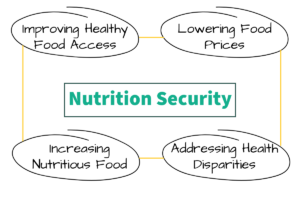 While these efforts are important, they overlook how food waste can limit the food choices people can make.
The Connection Between Food Waste and Food Choices
Many of the foods linked to positive health outcomes, such as fruits, vegetables, dairy products, and fresh meats, also spoil quickly and often end up in the trash (Conrad et al., 2018). For households managing limited food budgets, the possibility that these foods could spoil before they are used can be a major concern.
As a result, some consumers may choose less nutritious foods, such as chips, instant noodles, or cookies, instead of healthier options. These foods are often less likely to spoil and go to waste. These choices may not reflect what people prefer to eat but may simply be purchased out of fear of losing money on food that may go to waste. Research suggests that concerns about spoilage and waste can significantly influence purchasing decisions for households, potentially reducing the amount of nutrient-dense foods brought into the home (Balto et al., 2024; Meng et al., 2026).
This creates an important challenge: if individuals avoid purchasing healthy foods due to concerns about waste, efforts to improve nutrition security may not achieve their full impact.
Why Food Waste Reduction Matters for Nutrition Security
Reducing food waste should not be viewed solely as a sustainability strategy. It may also be an effective tool for supporting healthier eating habits and expanding access to nutritious. When households feel confident that they can properly store, prepare, and use perishable foods before they spoil, they may be more willing to purchase fresh, nutrient-rich options. In this way, food waste reduction can help remove a practical barrier to healthy eating.
Potential benefits include:
- Increased confidence in purchasing fresh foods
- Better use of household food budgets
- Improved dietary quality
- Greater access to nutrient-dense foods
- Reduced risk of diet-related diseases.
Opportunities for Action
Although research on the connections between food waste reduction and nutrition security is limited, several strategies show promise. And, consumers wanting to improve their knowledge and understanding of some of these strategies can contact a local Cooperative Extension office to ask about classes being offered. Below are a few things to consider.
Meal Planning and Shopping
Teaching consumers how to plan meals and grocery shop can help households buy only what they need, reduce waste, and save money. Meal planning also encourages households to check what foods and ingredients they already have before heading to the store. This simple step can help prevent buying double items and makes it easier to use ingredients already on hand, including leftovers from previous meals.
The Resource Library on the Center for Food Conservation & Waste Reduction’s website offers several helpful tools, including an Inventory Tracker, Meal Plan Calendar, and a Shopping List to support healthy meal planning and shopping (filter by or search for these terms in the Resource Library. These resources can help your family keep track of what you already have in your pantry, plan meals for the week, and create an organized shopping list to help you buy food in all the food groups needed for balanced, nutritious meals for your family and stretch the food budget.
abc

abc
In addition to using planning tools, families can save money by taking advantage of apps such as Too Good to Go and Flashfood. These apps connect consumers with surplus food from local stores and restaurants at significantly reduced prices. By purchasing discounted food that might otherwise go to waste, families can save money and enjoy nutritious meals while helping reduce food waste in their communities.
Food Storage and Preservation
Simple tips about proper storage, like first in first out, labeling and dating leftovers and prepared foods, using clear containers, and regularly checking food storage areas to use up foods before they decline in quality or safety, can help keep food out of the trash. At-home food preservation techniques such as canning, freezing, drying, and pickling can extend the shelf life of fruits, vegetables, and other perishable foods. Proper storage and preservation ensure year-round food supply and could cut consumers’ grocery costs.
Food preservation does not always have to happen at home. Purchasing foods that are already canned, frozen, or dried is another convenient way to reduce spoilage and keep nutritious foods on hand. These options can be just as healthy as fresh foods, often cost less, and are available year-round. They can also save time on meal preparation while providing flexibility for busy families. Keeping a mix of fresh, frozen, canned, and dried foods at home can help ensure that healthy ingredients are available when needed and reduce the likelihood of food being thrown away. A word of caution, though…focus on purchasing items without added sugar, sauces, and that are low in sodium.
Portion Management
Ensuring that the right amount of food is prepared and served can play an important role in reducing household food waste and promoting healthy eating habits. For example, serving smaller initial portions and allowing household members to return for additional servings if they are still hungry can help prevent plate waste and ensure that food is consumed rather than discarded. However, if leftovers remain, store them safely in the refrigerator or freezer and plan to use them in future meals. Freezing leftovers is an easy way to extend their shelf life, reduce waste, and provide a convenient meal option for busy days.

Food Recovery and Redistribution
Community-based food recovery programs can help ensure that nutritious foods reach individuals and families who need them rather than being discarded. These grassroots initiatives ensure that food stays within the immediate community and ensure it is shared with your neighbors and friends. While most of these programs operate in specific communities, a few prominent ones include Food Rescue Us and Food Recovery Network. There are also local Facebook groups, such as Buy Nothing and Pay it Forward, that individuals can use to donate and receive food to reduce food waste and improve healthy eating.
Looking Ahead
As nutrition security continues to evolve as a public health priority, food waste reduction deserves greater attention within the conversation. By integrating waste-prevention strategies into nutrition and health initiatives, policymakers, healthcare providers, and community organizations may uncover new ways to improve healthy food access and support long-term well-being.
Food waste reduction is more than a sustainability goal. It may be a critical bridge between healthy food access and improved nutrition outcomes, helping individuals and families make the most of the nutritious foods available to them.
Finally, if you are interested in joining this important conversation and helping ensure that everyone in your community has nutritious food for a healthy life, September is Hunger Action Month. This nationwide movement brings people across the country into the fight to end hunger and improve the well-being of our communities. Your support can make a meaningful difference in advancing nutrition security within your community.
_______________________
Check out our other related blogs:
This work is supported by the Agriculture and Food Research Initiative, project award no. 2024-68015-42110, from the U.S. Department of Agriculture’s National Institute of Food and Agriculture. Any opinions, findings, conclusions, or recommendations expressed in this publication are those of the author(s) and should not be construed to represent any official USDA or U.S. Government determination or policy.
DISCLAIMER OF ENDORSEMENT: Reference to any specific commercial product, process, or service by trade name, trademark, manufacturer, or otherwise, does not necessarily constitute or imply its endorsement, recommendation, or favor by CFCWR. The views and opinions expressed herein shall not be used for advertising or product endorsement purposes.