
CFCWR Blog
Surplus to Savings: How Food Shopping Apps Are Fighting Food Waste One Bag at a Time
Written by: Karen Byrd, PhD, RDN, Research Administrator and Outreach Coordinator, and Mateo Dasso, Student Intern, Purdue University, CFCWR
Everything feels more expensive lately — food, gas, housing, utilities, even a quick trip or a night out. Prices keep climbing while wages don’t seem to be keeping pace, forcing many Americans to rethink how and where they spend their hard-earned dollars. When it comes to groceries and dining out, that pressure on the pocketbook means finding ways to save money isn’t just smart anymore—it’s essential.
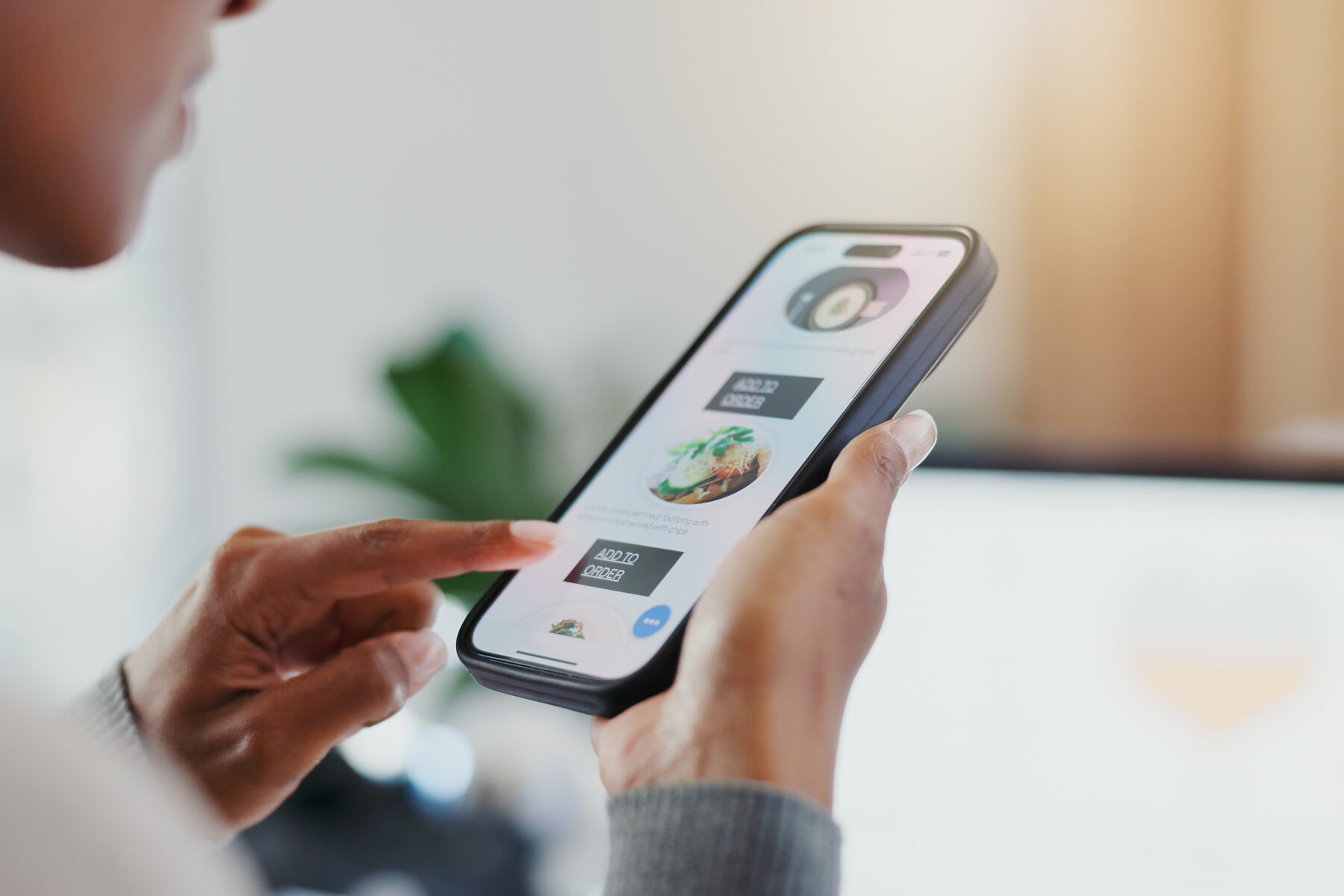
Couponing used to be the go-to strategy for saving money, but now smartphone apps can help consumers find affordable food without the hassle of searching for coupons. These apps can connect consumers with restaurants, bakeries, grocery stores, and convenience stores, offering steep discounts on food that would otherwise go to waste. The result: real savings for shoppers and meaningful environmental benefits by reducing the amount of food destined for the landfill.
While households generate the largest share of U.S. food waste, retailers and restaurants contribute significantly as well. ReFED estimates that these businesses produce more than 16.48 million tons of surplus food annually—worth over $183 billion—highlighting a major opportunity to redirect this excess rather than discard it. Food donations to hunger-relief organizations like food banks are a critical channel for redistributing surplus food; however, turning would-be food waste into retail value by offering discounts on near-expiring groceries or unsold prepared meals can help generate revenue for the retailer, save consumers money, and conserve food and reduce waste.
The challenge is making those deals easy to find. That’s where phone apps come in. Platforms like Too Good To Go, Flashfood, and Goodie Bag bridge the gap, alerting users to nearby discounts. Each follows the same core idea—save money, cut waste, create retail value—but with its own unique approach. Let’s take a closer look at how they work.
Too Good To Go
Overview: Founded in Copenhagen in 2016, Too Good To Go (TGTG) proclaims to be the “world’s largest marketplace for surplus food,” backed up by their presence across Europe and throughout the U.S. They partner with food retailers – restaurants, bakeries, grocery stores, convenience stores, etc. – to help these businesses sell food to consumers at a discounted price.
This certified B Corp boasts 500+ million meals saved, 120 million registered users, and 180,000 business partners. Their concept is based on “Surprise Bags”. This means customers don’t get to choose specific items, so the bag’s contents can change from day to day. Some days you may get a bag of your favorites, and other days you may not.
For the food retailers, TGTG reports that 41% of customers make additional purchases when they pick up their surprise bag, and 61% visit the location because they were picking up their purchase, increasing potential for new customers.
How it Works: Download the app, set your location (home, work, or a custom address), and browse nearby offers. When something catches your eye, reserve and pay in-app, then pick up during the listed time window. Show your purchase confirmation at the counter and collect your bag. Pickup windows can range from 30 minutes to a few hours, so check the details before committing.
Good to Know: Ratings (pickup, quality, variety, quantity) are available for each business. There is a section for “ingredients & allergens,” but all the ones we checked had boilerplate language that this information is not available, as each Surprise Bag is different. If a deal is sold out, the app suggests when to check back and shows similar nearby options. Referring friends earns you $2 vouchers, and your profile tracks CO₂ savings and total money saved.

Heading
Potential Savings: Most deals we saw offered a 65%+ discount. We even found a business offering a 10% off your next in-store purchase bonus when you buy a surprise bag through the app. Here are a few example discounts: xxxxxxxxxxxxxxxxxxxxxxxxxxxxxxxxxxxxxxxxxxxxxxxxxxxxxxxxxxxxxxxxxxxxxxxxxxxxxxxxxxxxxxxxxxxxxxxxxxxxxxxxxx
Heading
Availability: United States and Europe
Flashfood
Overview: Flashfood professes to be the #1 grocery deals app. This certified B-Corp was founded in 2016 in Canada by social entrepreneur Josh Domingues. They focus on connecting consumers to discounts on produce, meat, and packaged foods that are in surplus or nearing their best-by dates at grocery stores. It partners with 2,000+ of these stores across the U.S. and Canada, including giants like Kroger and Meijer, as well as smaller independent and regional grocers. They report $400 million+ in savings for shoppers and 160 million+ pounds of food diverted from landfills.
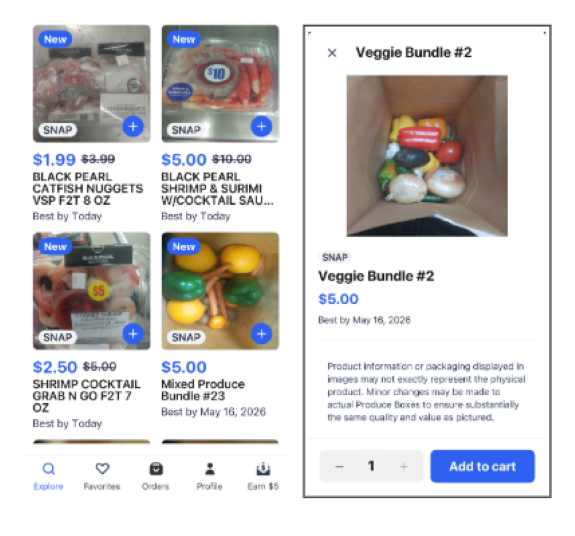
Unlike TGTG’s surprise bags, Flashfood often lets you know exactly what you’re buying. Packaged and labeled items come with full product details. Fresh produce bundles may also be available and are more of a grab-bag, like TGTG’s surprise bags; there’s a photo, but a disclaimer notes that the actual contents may not match the picture. A notable bonus: SNAP recipients can use their benefits directly in the app – important for people who would benefit most from discounted groceries.
For food retailers, Flashfood boasts 1.4 million users, with 72% reporting increased store visits and a 27% average reduction in food loss that would otherwise end up in the landfill.
How it Works: Download, set up your account, and browse deals in your area. Offers include the store name, distance from your location, how late the store is open, a picture of the item, the best-by date, and the original and sale prices. Add selected items to your cart, and check out in-app. When picking up your purchase, refer to the info in the app on where to go in the store, usually to the customer service desk. No set pickup window time; just shop before the store closes or the item’s best-by date – keep in mind that these dates vary from “today” to a few days in the future. One item we saw had a best-by date that was 6 months away!
Good to Know: You can link a grocery loyalty card for automatic rewards, if available (e.g., mPerks at Meijer). Referrals earn both you and a friend $5 credits (when the friend spends $7+). Keep track of your Flashfood savings
in your profile. Unlike on similar platforms, you can use the Flashfood website to search for partner locations; however, you can only find and purchase products through the app. One more thing…the Flashfood-Kroger relationship is relatively new. Therefore, the number of stores in the Kroger network may be limited at this time..
Heading
Potential Savings: Discounts we found were usually around 50% off. Here are a few examples: xxxxxxxxxxxxxxxxxxxxxxxxxxxxxxxxxxxxxxxxxxxxxxxxxxxxxxxxxxxxxxxxxxxxxxxxxxxxxxxxxxxxxxxxxxxxxxxxxxxxxxxxxx
Heading
Availability: United States and Canada
Goodie Bag
Overview: Goodie Bag, a relatively new entrant in this space, launched in Boulder, Colorado, in January 2023, born out of a startup pitch competition win. In just a few years, it’s racked up 500+ partner businesses, 110,000+ bags sold, $1.6 million+ in customer savings, and $3 million+ in additional revenue for local businesses. Their defining feature: partnering exclusively with local businesses. No chains, no big-box stores. Just neighborhood grocers, local bakeries, and restaurants.
Like TGTG, Goodie Bag sells “mystery bags.” So, there is a level of uncertainty in what you will actually get in your purchase. However, most partners provide details, such as allergen notes like “contains nuts,” “dairy-free,” and “gluten-free,” and flavor profiles like “sweet” or “savory” that you don’t see on TGTG. The “bag” descriptions are also more descriptive than TGTG, with names like “pastry bag,” “biscuit surprise,” and “surprise dinner box.”
For food retailers, Goodie Bags reports that partners see an average revenue per bag of $4.00 plus an average of $20 in additional full-priced purchases, a 40% chance of bringing in a new customer, and a 36% chance of converting that new customer into a loyal customer.
How it works: Download the app, set up as a consumer, and browse shops within a 20-mile radius (red map pins have active offers; grey pins don’t). Listings are categorized into “ready now,” “pickup later”, “fresh deals” (in some areas), and “all shops.” Users can find the business name, a brief description of the shop, what to expect from their bag, the pickup window, the distance, how many bags remain, the original and discounted prices, and instructions for collecting their bag upon arrival. Just like with TGTG, pickup windows vary widely, so plan accordingly.
Good to Know: Goodie Bag touts local partnerships but doesn’t formally spell out what “local” means. Ratings are listed with each business; however, unlike TGTG, the criteria are not provided. During checkout, a “quick add item” may be suggested to add to your cart, albeit at the
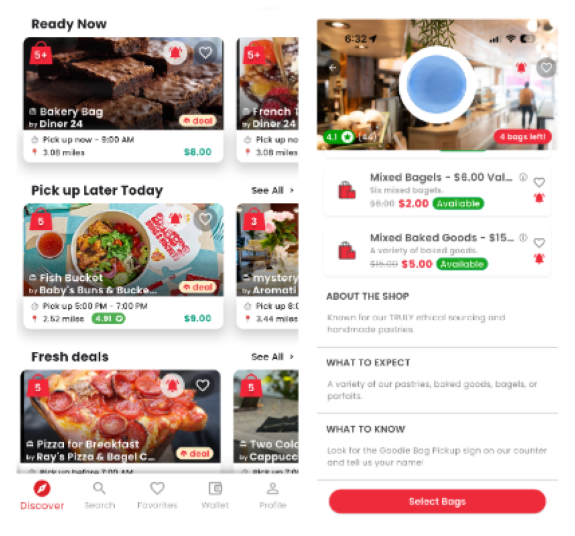
regular price. Referring a friend earns you a $1 credit. And, if your area isn’t covered yet, joining the waitlist nets you a $6 credit. Your profile tracks bags purchased, emissions reduced, and dollars saved.
Heading
Potential Savings: We typically saw deals offering 50% to 65%+ discounts. Here are a few examples: xxxxxxxxxxxxxxxxxxxxxxxxxxxxxxxxxxxxxxxxxxxxxxxxxxxxxxxxxxxxxxxxxxxxxxxxxxxxxxxxxxxxxxxxxxxxxxxxxxxxxxxxxxxxxxxxxxxxxxxxxxxxxxxxxxxxxxxxxxxxxxxxxxxxxxxxxxxxxxxxxxxxxxxxxxxxxxxxxxxxxxxxxxxxxxxxxxxxxxxxxxxxxxxxxxxxxxxxxxxxxxxxxxxxxxxxxxxxxxxxxxxxxxxxxxxxxxxss
Heading
Availability: United States, concentrated in areas in Arizona, Colorado, North Carolina, New York, South Carolina, Wisconsin, with a limited presence in California and Tennessee
Which App is Right For You?
These three apps all tackle the same core issues – converting surplus food into revenue for the seller and savings for the buyer while keeping perfectly good food out of the landfill. But, are they a good fit for you? That depends.
First, consider location. Each app operates within a limited network of participating businesses. If none are active in your area, they simply won’t be useful. Beyond that, think about your routine. Will you actually make time to pick up your deal? Can you fit it into your existing errands or commute, or will it require an extra trip? These practical details can make or break whether the savings are worth it.
Here is a quick summary comparison to help you think about which one may be best for you:

To Good To Go: Ideal for adventurous eaters without strict dietary restrictions or allergies. The surprise element may be part of the appeal for some. Partners include restaurants, bakeries, grocery stores, and convenience stores.

Flashfood: Best for grocery savings with more predictability. Especially valuable if you use SNAP benefits. Partners only with grocery stores.

Goodie Bag: Perfect for those who want to support local businesses while saving money. Like TGTG, some may find the “mystery” of what you will get appealing. Partners with restaurants, bakeries, and grocers.
heading
You don’t have to pick just one. Many people use all three, checking whichever has deals in their area on a given day. The apps are free to download, and the only real investment is a little flexibility. In a time when every dollar counts, that seems like a trade worth making.
Conclusion
Shopping apps like Too Good To Go, Flashfood, and Goodie Bag represent a simple but meaningful shift in how consumers can interact with the food system. By turning surplus into savings, they address two problems at once — the rising cost of groceries and the staggering amount of food that goes to waste each year. Whether you’re looking for the thrill of a mystery bag, the predictability of labeled grocery deals, or a way to support local businesses in your community, there’s likely an option that fits your lifestyle. The barriers to entry are low: the apps are free, the discounts are real, and the environmental payoff is built in. As food prices continue to put pressure on household budgets, these platforms offer a rare win-win — for your wallet, for businesses, and for the planet.
This work is supported by the Agriculture and Food Research Initiative, project award no. 2024-68015-42110, from the U.S. Department of Agriculture’s National Institute of Food and Agriculture. Any opinions, findings, conclusions, or recommendations expressed in this publication are those of the author(s) and should not be construed to represent any official USDA or U.S. Government determination or policy.
DISCLAIMER OF ENDORSEMENT: Reference to any specific commercial product, process, or service by trade name, trademark, manufacturer, or otherwise, does not necessarily constitute or imply its endorsement, recommendation, or favor by CFCWR. The views and opinions expressed herein shall not be used for advertising or product endorsement purposes.