
CFCWR Blog
Using Every Part of the Produce: How to Use Scraps, Stalks, and Stems to Reduce Food Waste
Written by guest blogger Liz Pfiefer, Purdue University, Senior Nutrition & Dietetics Student
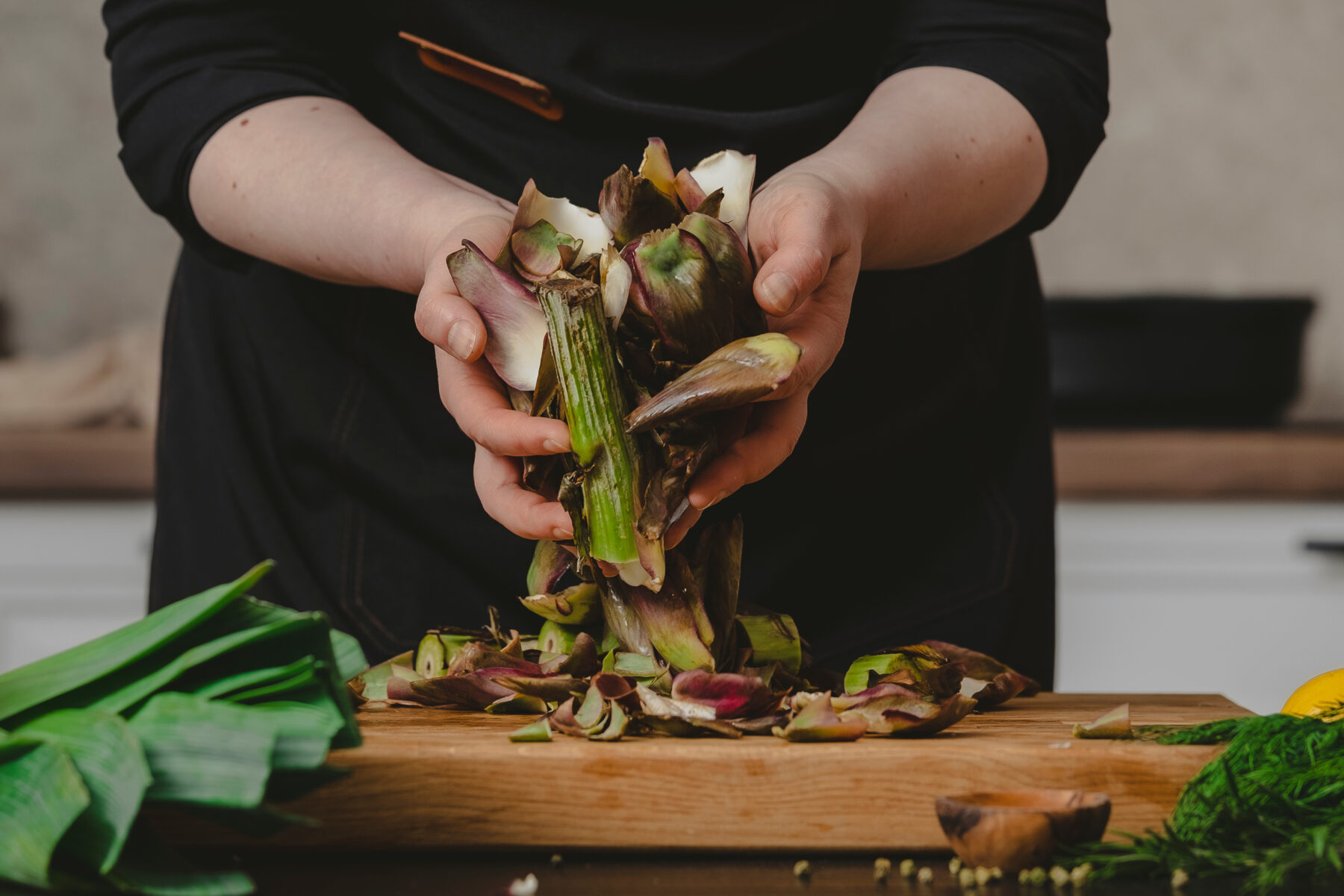
Bruised apples, potato peels, and broccoli stalks aren’t the first things you’d think of when trying out a new recipe. However, these commonly discarded food scraps can actually be great additions to your meals and can make a tasty dinner, side dish, or dessert. It is a common misconception that these parts of produce aren’t edible, but the opposite is true; they actually contain quite a good amount of nutrition and can be prepared in ways to make them delicious. When we throw out these scraps without a second thought, we miss out on a whole lot of nutrients as well. Plus, tossing these trimmings into the trash means increasing the mounds of food in landfills.
Why Food Waste Happens
Food waste is an ever-growing issue in the United States, with around 30-40% of our total food supply going to waste, according to the USDA. Surplus food occurs at every step of the supply chain, but the majority of it happens in the home. In 2024, homes accounted for 38.7% of wasted food, according to ReFED. This is a result of multiple factors, many of which are commonly reported, such as poor shopping and meal-planning behaviors (either due to a lack of education or an inability to stick to lists/plans), improper food storage, and confusion about food date labels. But what doesn’t get discussed much is the lack of knowledge about repurposing food scraps, particularly produce scraps.
Fruits and vegetables account for the largest share of total food waste in the U.S. at 45.2%, representing 10.5 million tons! In the household kitchen, much of the waste from fruits and vegetables consists of skins, leaves, peels, stalks, and stems. Yet there are simple, practical ways to incorporate these nutrient-dense produce scraps into your meals. Check out a few examples below!
Apples
Do you have a few apples that are bruised or have brown spots? A great way to utilize these fruits (especially if you have picky kids who refuse to eat any fruit with a brown spot) is to slice them up and stew them. Apples contain pectin, a soluble fiber that is also a prebiotic. Prebiotics feed the “good” bacteria in our gut and are an essential part of a healthy diet. When apples are cooked, they can be easier on the stomach compared to the raw fruit due to the fibers being broken down by the heat. Cooking lowers the water content of the fruit, which increases nutrient density, making it more filling. Stewed apples can be used as a topping for oatmeal, yogurt, and pancakes to start the day off right. They can also be incorporated into apple crisp for a sweet, low-waste dessert.
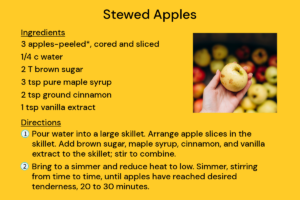
*And, don’t toss those peels and cores in the trash – there are lots of ways to use them!!
Recipe adapted from: https://www.allrecipes.com/recipe/8502533/stewed-apples/
Potato Peels
Next time you’re prepping potatoes, hold onto those skins! Potato peels are rich in fiber, potassium, iron, and antioxidants. They can be easily baked into a healthier version of potato chips that pack a nutritional punch. These are a great choice for when you want a salty snack with a little bit of crunch.
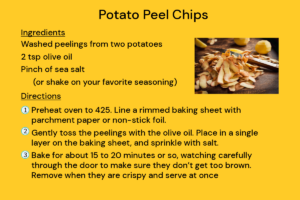
Recipe adapted from: https://www.framedcooks.com/potato-peel-chips/
Leafy Green Stalks
As mentioned before, it is a common misconception that leafy green stalks are not edible. However, the stems of broccoli, Swiss chard, cauliflower, and other stemmed veggies contain a healthy amount of fiber, vitamin C, potassium, and sulforaphane. These stalks are usually quite tough when raw, which is why they are commonly discarded. When stir-fried, these veggie parts become more tender, and when seasoned, their flavors can really shine.
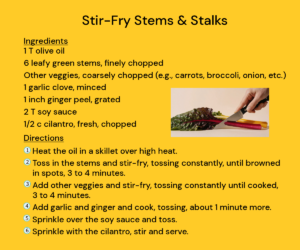
Recipe adapted from: https://www.foodnetwork.com/recipes/ree-drummond/stir-fried-broccoli-stems-4635258
Veggie Scraps
Our final recipe incorporates scraps from all sorts of veggies, such as onion and carrot peels, herb stems, potato peels, and celery tops. This recipe requires a good amount of these scraps, so we recommend collecting them in a freezer bag and storing them until you have enough for stock. These veggie bits contain antioxidants, fiber, and various other vitamins and minerals, depending on what combination of scraps you choose to use. Some vegetables you would want to avoid for this recipe include broccoli, cauliflower, Brussels sprouts, arugula, and any veggies with strong bitter flavors (use those for the stir fry recipe above instead!). There is no doubt that this stock recipe is a great way to reduce your kitchen’s food waste in a flavorful way.
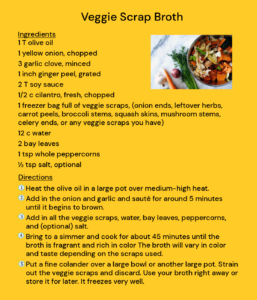
Recipe adapted from: https://itdoesnttastelikechicken.com/make-vegetable-broth-veggie-scraps/#recipe
Pro Tip: An easy kitchen hack to help you use every drop of your scrap stock is to pour it into ice cube trays and freeze. Then, when inspiration strikes, pop out a cube or 2 to add to liquids for cooking rice, risotto, potatoes, or soups, or for deglazing a pan. It’s also an easy way to give sautéed veggies an extra pop of flavor.
Final Thoughts
Conserving food and reducing waste doesn’t have to be so complicated. It simply requires a little bit of creativity and a perspective shift on how we think about using our food. By using every part of the produce, you can save money and boost nutritional value of your groceries while also cutting down on waste. Being intentional with how we use our produce through making these small changes can have a meaningful impact while also leaving our kitchens a little greener than we found them.
Be sure to check out our Resource Library for more ideas of how to keep your food scraps out of the landfill (type “food scraps” in the search)!
This work is supported by the Agriculture and Food Research Initiative, project award no. 2024-68015-42110, from the U.S. Department of Agriculture’s National Institute of Food and Agriculture. Any opinions, findings, conclusions, or recommendations expressed in this publication are those of the author(s) and should not be construed to represent any official USDA or U.S. Government determination or policy.
DISCLAIMER OF ENDORSEMENT: Reference to any specific commercial product, process, or service by trade name, trademark, manufacturer, or otherwise, does not necessarily constitute or imply its endorsement, recommendation, or favor by CFCWR. The views and opinions expressed herein shall not be used for advertising or product endorsement purposes.