
CFCWR Blog
Back to School: A Closer Look at Milk Waste in School Cafeterias
Written by Emma Sheward, CFCWR Student Intern, Purdue University, and Brenna Ellison, PhD, Purdue University Ag Econ Professor and CFCWR Director
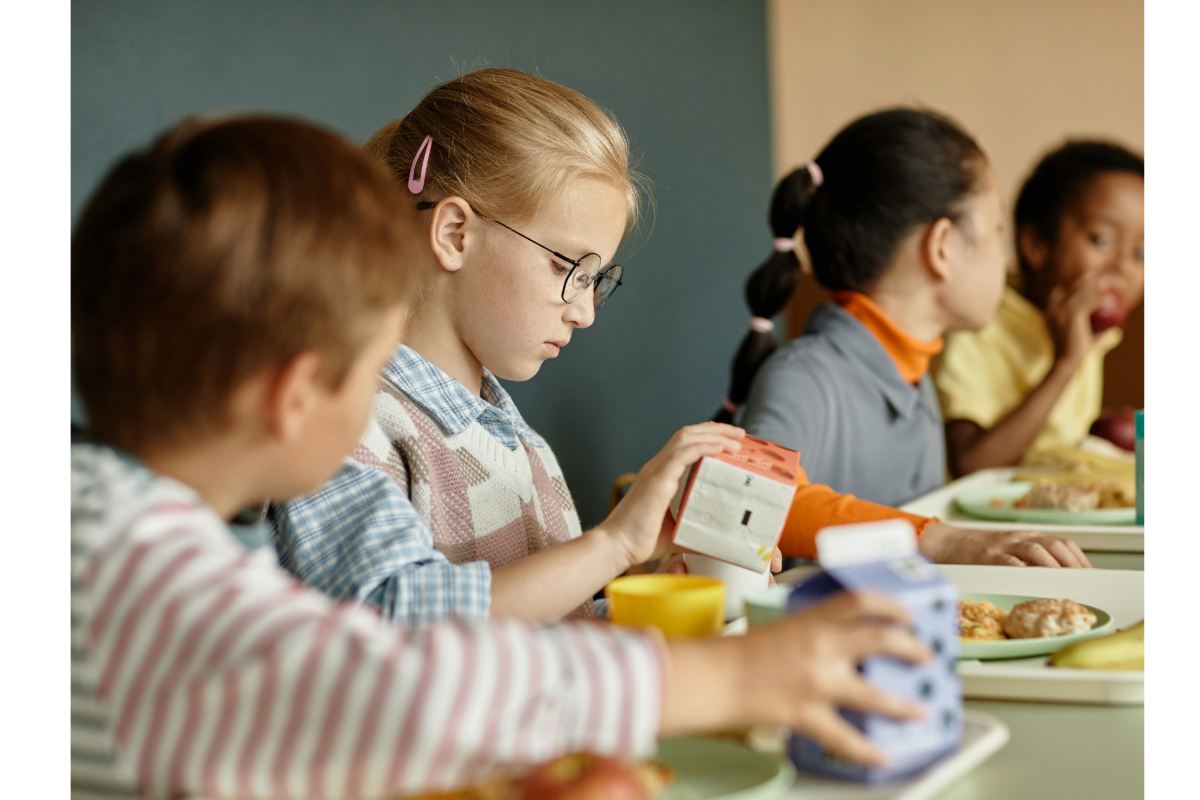
As many families are sending kids back to school this fall, we are thinking about the school cafeteria. The National School Lunch Program (NSLP) is a massive food provider for school children across the U.S. In 2024, the NSLP provided more than 4.8 billion lunches! However, school cafeterias can also generate substantial food waste. The World Wildlife Fund (WWF) estimates that up to 530,000 tons of waste are generated in K-12 schools each year, and one of the most commonly wasted items is milk. In this blog post, we take a closer look at milk waste in schools, including why it happens and how we might reduce it.
The magnitude of milk waste in schools
First, let’s talk about the scale of milk waste in schools. In 2014-2015, the USDA’s School Nutrition and Meal Cost Study found that 29% of milk in U.S. schools was discarded – second only to vegetables as the most wasted item in K-12 cafeterias. Other studies have also observed considerable milk waste in schools. In one study, an urban school district found that 45% of milk offered in the School Breakfast Program (SBP) was wasted, estimated to be worth 16% of the district’s annual SBP expenditures. Nutrient loss was also concerning, with an estimated 27% of vitamin D and 41% of calcium required in SBP meals ultimately wasted. Further, WWF estimates that up to 45 million gallons of milk are wasted each year in schools. When milk is wasted, there are also environmental impacts that cannot be ignored. The WWF report notes that each gallon of milk produced in the US requires 17.6 pounds of carbon dioxide (CO2) and 144.2 gallons of water (used to produce, transport, cool, and store milk).
Why is so much milk tossed?
The economic, nutritional, and environmental consequences of milk waste are significant. So why is the milk being wasted? There are several factors that contribute to milk waste in schools:
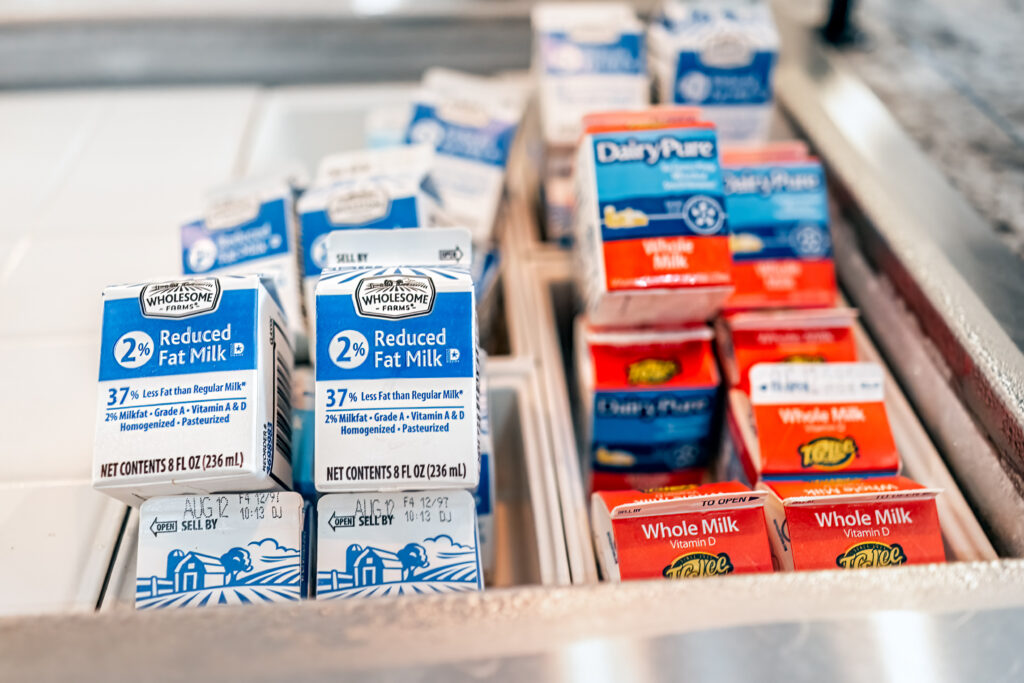
- Quantity served: When milk is served in cartons or plastic bottles, this may provide more milk than some students prefer to consume, which naturally creates waste.
- Environmental factors: A big factor that contributes to waste (both milk and food) is time available for lunch. While the CDC recommends at least 20 minutes of seated lunch time for students, the reality is that many students end up with 15 minutes or less (between waiting in school lunch lines, bathroom breaks, etc.). Lunch is also a time for students to talk and socialize, which may also reduce the time available to eat. Less time to eat simply equals more food wasted. Further, when recess is scheduled immediately after lunch, children may rush through their meal (and waste more) so they don’t miss playtime. Some schools (other examples here and here) have experimented with offering recess first and found it can reduce food waste, though this typically happens through greater consumption of fruits and vegetables (rather than milk).
- Lack of beverage options: In some schools, milk is the only beverage option, which may result in children taking the beverage but ultimately drinking very little of it. Schools that offer alternatives, such as water or lactose-free or non-dairy milks (for those with milk intolerances or allergies), in addition to milk may help students find beverages that better meet their needs and preferences, potentially reducing waste.
- Sensory issues: While research has shown that milkfat level can influence the color, mouthfeel (e.g., thickness or creaminess), smell, and flavor of milk, there is little evidence that milkfat level affects liking of milk among children. However, students may not like the flavor of plain milk and prefer chocolate milk instead. While this can increase milk consumption, it also increases consumption of added sugars. Milk temperature can also significantly affect waste. In many schools, for example, some school breakfast programs take place in classrooms rather than the cafeteria. As milk sits out, its temperature will rise, which may reduce palatability to students. [To make matters worse, one study reported that unopened milk cartons were also discarded from classrooms due to food safety concerns.]
How can we reduce milk waste in schools?
Two strategies have received much attention for their potential to reduce milk waste in schools: bulk milk dispensers and share tables. Let’s take a closer look at each strategy and what research says about their ability to reduce milk waste.
Bulk milk dispensers remove the need for individual milk cartons in school cafeterias and function more like a water fountain for students. This means students can get the amount of milk they want rather than being limited to a fixed carton size. Another key benefit of bulk milk dispensers is that they can keep milk colder and fresher for longer because they can provide better temperature consistency.
While the start-up costs of implementing bulk milk dispensers can be a barrier or challenge for some schools, the return on investment appears to be promising. Multiple schools have documented significant reductions in milk waste, milk purchasing costs, and disposal fees by switching from milk cartons to bulk milk dispensers.
For schools that are not able or ready to make the switch to bulk milk dispensers, share tables are another great option to reduce milk waste (and fight childhood hunger). A share table is a designated station in a school cafeteria where students can drop off whole, unopened food or beverage items they don’t want. Other students who are still hungry can then grab extra items at no cost. Schools are also allowed to serve the items from the share table in after-school programs or donate them to local food banks.
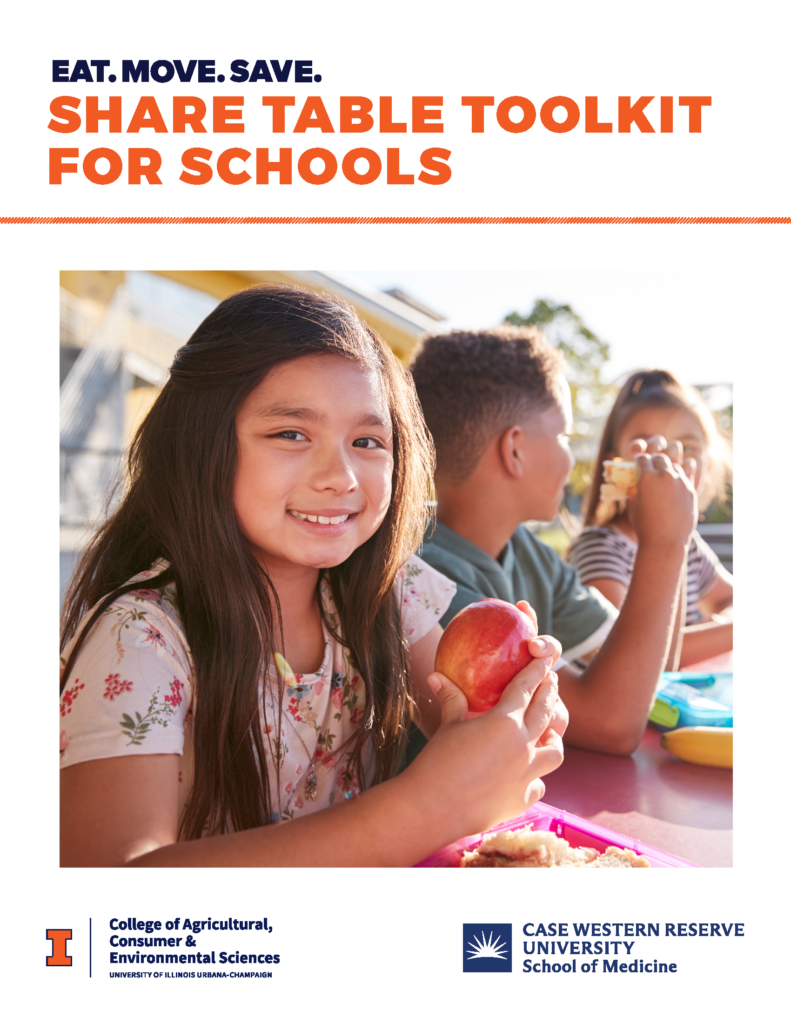
One challenge with milk on share tables specifically concerns food safety and maintaining appropriate temperatures, yet multiple research studies have shown that share tables do not increase the likelihood of milk spoilage or compromise milk quality. Further, NSLP regulations for share tables are subject to state and local health and food safety regulations, meaning there are layers of oversight for food safety. To learn more best practices related to share tables, check out the Eat.Move.Save – Share Table Toolkit for Schools in our Resource Library.
In addition to bulk milk dispensers and share tables, schools may also consider improving access to free drinking water for students during lunch. This is a requirement of the Healthy Hunger-Free Kids Act and is intended to give students a healthy alternative to sugar-sweetened beverages. One study in New York City found that adding water jets to a school cafeteria improved weight outcomes in students as they switched to water instead of taking chocolate milk (note that there was no change in consumption of unflavored milk).
How might the Whole Milk for Healthy Kids Act affect milk waste?
In 2025, Congress passed the Whole Milk for Healthy Kids Act, which prides itself on bringing back choice to schools and students when it comes to milk. Specifically, the act revises NSLP requirements to allow schools to offer whole flavored and unflavored milk options in addition to reduced- and no-fat milk options. Yet, it is unclear whether this will translate to less milk waste.
On the one hand, some students may prefer whole milk to other low-fat milk options, which may increase consumption and reduce waste. On the other hand, this act does not address any of the other factors that contribute to milk waste, such as not enough seated lunch time, a lack of beverage options, or fixed package sizes that may provide more milk than needed.
Additionally, schools may struggle to figure out the “right” balance of milk inventory to meet students’ needs, which could contribute to increased waste (at least during a transitionary period). For example, is adding whole milk to the menu increasing the total number of students selecting milk or is it taking away students who previously selected 1%? School foodservice operations already struggle with high food costs, and we don’t know how many will want to take on the risk of increasing milk inventory without a sense of how much whole milk will be demanded. Many schools will likely learn through their own experimentation or wait and make decisions based on the experiences of their peers. Ultimately, more research will be needed to evaluate the impact of this act on waste.
Conclusion
Milk waste has been and continues to be a pain point in school foodservice environments. So, what can we as individuals do?
-
- Talk to the kids in your life about mindful consumption practices (e.g., take only what you plan to eat/drink)
- Encourage placing unopened milk on share tables at school (if available)
- Advocate for share tables in your local schools (if they are not in place already)
Let’s keep milk and other foods out of the trash in our schools!
This work is supported by the Agriculture and Food Research Initiative, project award no. 2024-68015-42110, from the U.S. Department of Agriculture’s National Institute of Food and Agriculture. Any opinions, findings, conclusions, or recommendations expressed in this publication are those of the author(s) and should not be construed to represent any official USDA or U.S. Government determination or policy.
DISCLAIMER OF ENDORSEMENT: Reference to any specific commercial product, process, or service by trade name, trademark, manufacturer, or otherwise, does not necessarily constitute or imply its endorsement, recommendation, or favor by CFCWR. The views and opinions expressed herein shall not be used for advertising or product endorsement purposes.