
CFCWR Blog
Purdue University’s Boiler Batter Apple Muffin Mix: An Upcycling Success Story
Written by Emma Sheward, CFCWR Student Intern, Purdue University
Collaborators from Purdue University include Payten Logue, CFCWR Student Intern; Karen Byrd, PhD, RDN, CFCWR Research Administrator and Outreach Coordinator; and Brenna Ellison, PhD, CFCWR Director
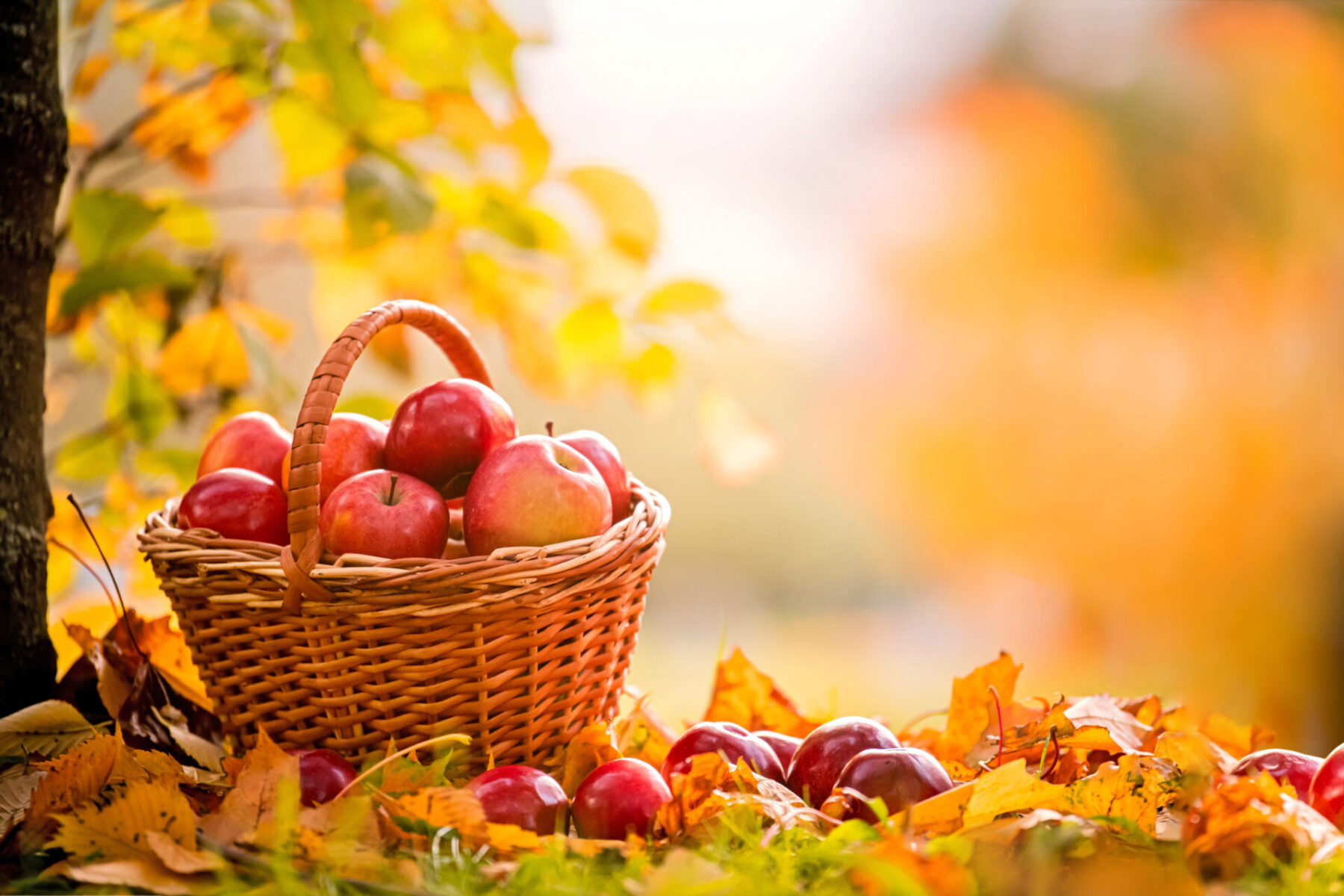
It’s officially fall – the best time of the year for pulling out your favorite sweater, winding your way through a corn maze, and picking apples at your favorite orchard! While it’s hard to resist eating a freshly picked apple, apples make it into consumers’ homes in many different ways. In fact, 52% of U.S. apples end up as juice. But, making juice results in a byproduct called apple pomace. This is what remains after pressing apples for juice or cider and includes things such as the skin, pulp, seeds, and stems. While apple pomace can be turned into compost or animal feed, Wea Creek Orchard wanted an alternative solution for the orchard’s leftover apple skins and pulp that would prevent waste while also providing added value.
Finding an Upcycling Solution
Located just south of Lafayette, Indiana, Wea Creek Orchard is a seventh-generation family farm with roots dating back to 1855. While originally a livestock and row crop operation, the farm transitioned into a modern U-pick destination in 2008. Today, it is home to approximately 2,000 fruit trees, including over 20 varieties of apples and 250 peach trees across its sprawling 72-acre property. Additionally, the orchard currently has a variety of apple-based products in its farm store, such as apple salsa, preserves, honey, etc.
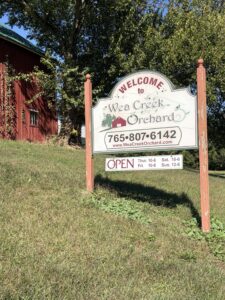
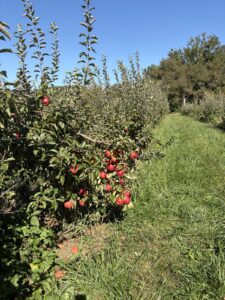
To help with its apple pomace issue, Wea’s orchard steward, Perry Kirkham, reached out to Purdue University’s food science experts, specifically the department’s Food Entrepreneurship and Manufacturing Institute (FEMI). This organization helps local partners from farmers to corporations develop and commercialize sustainable food and beverage innovations – a perfect avenue to help Wea find a new solution for their apple pomace byproduct.
This upcycling challenge landed in the hands of students in a Purdue University Food Science course, FS41000 Boilermaker Sauces and Pickles. While the student-led team initially considered cake and cupcake mixes, they ultimately landed on a muffin mix, the perfect item for the nutrient fibers that apples provide.
Turning Waste Into Value
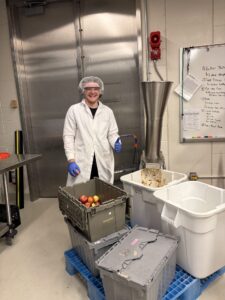
Making the muffin mix started once the apples were received at Purdue’s Philip E. Nelson Hall of Food Science. The apples were pressed to make cider, which resulted in the pomace byproduct. The pomace was dried out and put into the oven. Next, it was made into powder while other flavors and flour were added. With an assist from the Purdue University Ag Communications experts, the packaged and labeled product was pitched to a local store in Lafayette, Indiana, A Pinch of Pepper. Consumers enjoyed the local origins and student learning opportunity behind the mix. It was also available on the Purdue campus at the Purdue Butcher Block. And, to make it even more accessible, buyers in Indiana could also find the mix at the Purdue Extension Store.
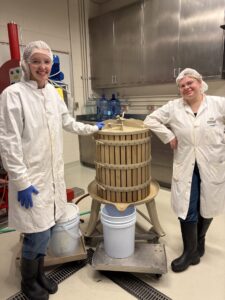
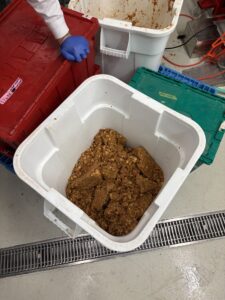
Wea and FEMI’s efforts to create a value-added product proved successful with consumers, demonstrating a clear market for this upcycled product. It was so successful that it sold out a few months after its launch. But, don’t worry…virtual and real shelves will soon be restocked! Dr. Hansel Mina, FEMI Lead, indicated that they are currently processing the fall apple crop from Wea Orchard, as well as apples from the Meigs Horticulture Research Farm at the Throckmorton-Purdue Agricultural Center, and expects the product to be available around the first week of November, 2026.
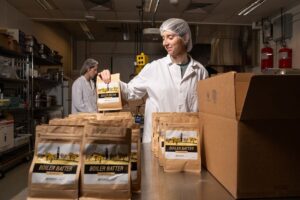
So, set a reminder to check the Purdue Extension Store, or stop by A Pinch of Pepper, or the Purdue Butcher Block if you happen to be in town, and get a box to make some delicious apple muffins. Once it is sold out, you will have to wait until next fall’s apple season for “shelves” to be restocked. But, more products that use the apple pomace could be on the way. Dr. Mina indicated the fall 2026 FS41000 food science students are charged with developing other food products that use this byproduct. He stated, “Our vision for food sustainability is to develop products that help us reduce waste.”
Conclusion
Fall is the perfect time for a freshly pressed cup of apple cider or juice, but let’s not forget about the byproducts that are created when these delicious products are being made for consumers. Often, there are creative upcycling opportunities to get the most out of byproducts – which keeps waste out of the landfill and may also provide an additional revenue stream for food producers. The partnership between Wea Creek Orchard and Purdue’s FEMI is a great example of an industry-academic partnership that can turn a waste product into something useful for humans. This partnership can serve as a model for local growers and universities on how to create meaningful experiential learning opportunities for students, promote sustainability and environmental stewardship, and identify and develop value-added products for the marketplace.
This work is supported by the Agriculture and Food Research Initiative, project award no. 2024-68015-42110, from the U.S. Department of Agriculture’s National Institute of Food and Agriculture. Any opinions, findings, conclusions, or recommendations expressed in this publication are those of the author(s) and should not be construed to represent any official USDA or U.S. Government determination or policy.
DISCLAIMER OF ENDORSEMENT: Reference to any specific commercial product, process, or service by trade name, trademark, manufacturer, or otherwise, does not necessarily constitute or imply its endorsement, recommendation, or favor by CFCWR. The views and opinions expressed herein shall not be used for advertising or product endorsement purposes.