
CFCWR Blog

Rise to the Occasion: Smart Storage Tips for Bakers & Bread Lovers to Honor World Bread Day
Written by Karen Byrd, PhD, RDN, CFCWR Research Administrator and Outreach Coordinator
Most of us need no excuse to eat bread — one of the world’s most popular foods. However, October 16 marks World Bread Day, an ideal occasion to honor one of our oldest and most fundamental culinary traditions. This day highlights the deep cultural significance, global impact, and craftsmanship that goes into baking. It celebrates the farmers, millers, and bakers behind bread and reminds us of its importance in global food security. Around the world, people mark it with baking workshops, bakery bread donations, and community programs about bread’s role in culture and nutrition.
Bread making takes immense time, effort, and resources. Yet, a surprising amount of food waste happens because everyday bread ingredients and bread products go bad before we can finish them. Even if we don’t make it at home, too much of that delicious bread we buy ends up in the trash.
To help you celebrate World Bread Day sustainably—and keep your pantry running smoothly year-round—we sat down with Amber Eisler, Director of Baking Education at King Arthur Baking Company, who oversees its baking schools in Vermont and Washington State, along with its live and on-demand online classes. A bread baker by training, Amber started in King Arthur’s small bakery almost 22 years ago and moved into teaching. She shared her expert insights on storing your baking essentials, keeping your bread fresh, and giving your loaves a second life.
“““““““““““““““““““““““““


Master the Storage of Baking Ingredients
Baking is often called an “exact science” compared to cooking, and an ingredient’s quality and freshness can make a big difference. However, Amber says you can keep those ingredients out of the trash and in your delicious baked goods with proper storage. Here are some tips that can dramatically extend the shelf life of your bread-making ingredients:
- Freeze Your Whole Grains: All-purpose flours keep well for a long time in a cool, dark spot in an airtight container, but whole-grain flours don’t. Those flours (like whole wheat and whole rye) and specialty flours (such as buckwheat or cornmeal) contain germ with oils that quickly go rancid at room temperature. As Amber notes, “Always store those flours in the freezer.” When sealed properly in airtight containers or freezer bags, they can last for years. And don’t worry too much about thawing time; let it warm up a little at room temperature before you start mixing your ingredients together.
- Embrace Airtight Vessels: Humidity is the enemy of baking. The paper bag flour comes in is a fine short-term solution, but it doesn’t do enough to guard against moisture absorption long term. Therefore, store flours, as well as baking powder and baking soda, in airtight containers to protect them from ambient moisture and pests.
- Test Before You Toss: Don’t throw away older yeast or leavening agents prematurely. Test your yeast by adding a pinch of yeast to warm water with a little sugar. If it is still good, the yeast should “activate,” and you should see some bubbles after 5 minutes. Truly dead yeast is less common than people think, Amber says. “There seems to be an anxiety around ‘bad yeast.’ But yeast is pretty durable.” You can also test baking soda with a splash of vinegar to see if it “volcanoes” back to life.

- Smart Storage & Shopping for Butters and Oils: Keep in mind that butter and oils can go rancid. Unsalted butter has a shorter shelf life because it is missing the salt that acts as a preservative. However, Amber says it’s “absolutely great” to buy it on sale and freeze it. For oils, smart shopping is the key — buy a size you will actually use. If you only use a little, don’t get the warehouse-club size.
Store Your Bread Smartly (The Freezer is Your Friend!)
The golden rule of fresh bread storage? As Amber joked, “The best place to store bread is in your belly!” But most of us don’t eat all the bread in one day when it comes out of the oven or when bringing it home from the grocery store or bakery. So knowing how best to store your bread can mean the difference between it ending up in your belly and in your waste bin. Proper handling is key to preventing mold and staleness. Here are Amber’s tips:
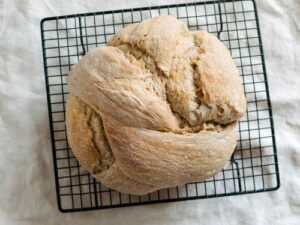
Cool Completely Before Bagging: If a loaf (like a freshly baked focaccia) cools in its pan or gets wrapped while slightly warm, trapped condensation will quickly lead to mold. Always cool bread completely on a wire rack before sealing it.
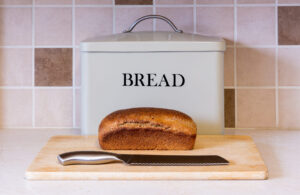
On the Counter: Bread will usually stay fresh at room temperature for 2 to 4 days. Bread boxes, paper bags, and cloth bags are often recommended. However, Amber mentioned that no bag is perfect. “Plastic isn’t perfect, paper isn’t perfect, a cloth sack isn’t perfect.” When deciding what to use, she asks herself, “What am I up against today?” In humid Vermont summers, mold is the enemy, so she reaches for porous paper bags. In dry months, bread left in a paper bag overnight can turn rock hard. The right bag can change with the season.
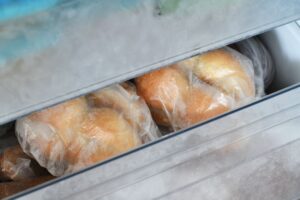
Ditch the Fridge: Refrigerating bread causes it to stale faster. Instead, find space in your freezer. Slicing your bread before freezing lets you pull out exact portions as needed, drastically cutting household food waste. Keep in mind that homemade bread doesn’t contain the preservatives that keep many store-bought breads from spoiling, so you may need to move it to the freezer sooner than you think.
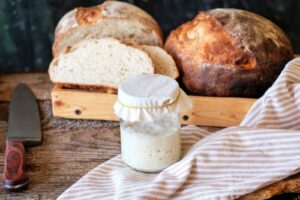
Consider Sourdough: Sourdough bread is naturally more acidic, changing the pH of the dough and making it inherently more resistant to spoilage and mold than standard bread. King Arthur has everything you need to become “Sourdough Savvy.”
Give Stale Bread New Life
Bread should rarely ever be thrown away (unless moldy), even when it passes its prime. There are endless ways to reinvent a slightly dry loaf. Amber suggests the following.
- Revitalize with Heat: Toasting dry bread or turning it into a decadent grilled cheese with gooey, melted cheese brings it right back to life.
- Bake into Treats: Use day-old bread or pastries for classic French toast, bread puddings, or sweet breakfast treats like Bostock (try this King Arthur Fresh Strawberry Bostock recipe).
- Make Homemade Breadcrumbs: Dry out leftover slices in a low oven (150–200°F) until crisp, then pulse them in a food processor to create additive-free breadcrumbs ready for any recipe.
Amber’s Top 3 Takeaways to Reduce Bread & Baking Waste
To wrap up, we asked Amber to give us her 3 top tips to help you get started on reducing bread and baking waste.
- Freezer for Whole Grains: Always store whole-wheat and whole-grain flours in the freezer to protect their natural oils.
- Buy Mindfully: Take a realistic inventory of your baking habits and pantry items ahead of baking to avoid over-purchasing.
- Use Airtight Containers: Protect your dry goods and leavening agents from humidity by upgrading from paper bags to sealed, airtight storage vessels.
Celebrate on October 16
While flour and bread are typically inexpensive, each loaf carries time, effort, and other resources along the food chain. On World Bread Day, take time to make some bread, donate bread, or break bread with friends and family. Follow Amber’s tips to keep bread filling bellies and not trash bins!
Epilogue: This blog was inspired by time I spent at the Norwich, Vermont, King Arthur Baking School, in a ½ day baking class. I had a great time and am proud of my focaccia!

This work is supported by the Agriculture and Food Research Initiative, project award no. 2024-68015-42110, from the U.S. Department of Agriculture’s National Institute of Food and Agriculture. Any opinions, findings, conclusions, or recommendations expressed in this publication are those of the author(s) and should not be construed to represent any official USDA or U.S. Government determination or policy.
DISCLAIMER OF ENDORSEMENT: Reference to any specific commercial product, process, or service by trade name, trademark, manufacturer, or otherwise, does not necessarily constitute or imply its endorsement, recommendation, or favor by CFCWR. The views and opinions expressed herein shall not be used for advertising or product endorsement purposes.