
CFCWR Blog
Written by Rebecca Naab, MPH, RDN, Outreach Coordinator, CFCWR, Case Western Reserve University
It’s 6:00 p.m., and you’re finally ready to cook. You walk into the pantry, and your stomach sinks: the onions have gone soft and moldy. You reach for the sour cream tucked in the back of the fridge, take off the lid, and instantly smell that it is just a little too sour to safely eat. One by one, the ingredients you were counting on land in the trash, and your dinner plan goes with them. It’s a small moment, but it repeats itself in millions of kitchens every single day. Organizations like ours are working to close that gap, offering resources and education to help households waste less. However, reducing global food waste takes more than just one organization – it takes a community of people working together on this issue.
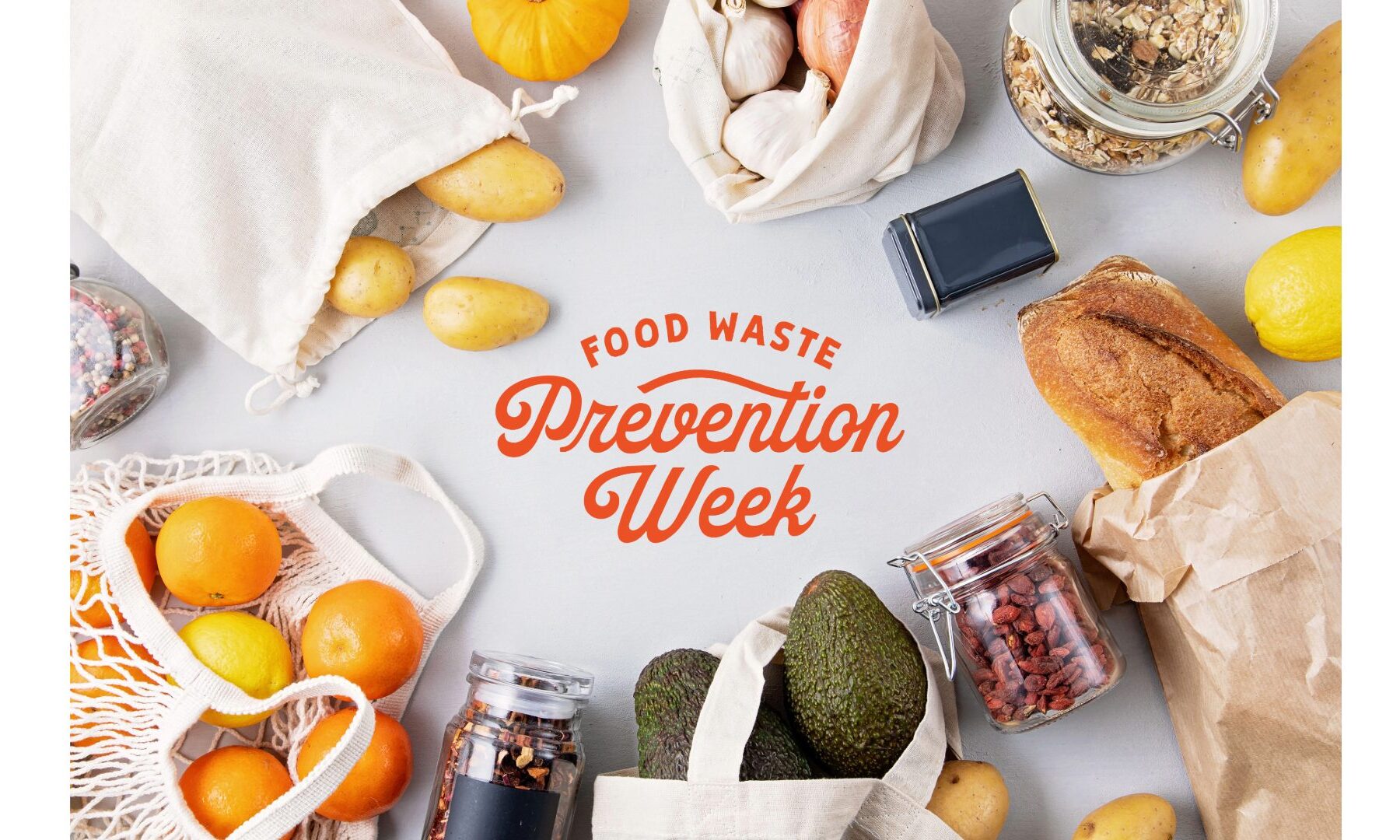
Cue Food Waste Prevention Week. What is Food Waste Prevention Week (FWPW), you might ask? It’s a national campaign that highlights, supports, and encourages communities, organizations, and individuals to reduce food waste. Mark your calendars and get ready to celebrate September 28 through October 4, 2026.
How Did this get started?
To learn how this initiative got started, we spoke with Elaine Floire, an influential leader in the food waste prevention movement and a key organizer in launching FWPW. Elaine’s background started as a public-school educator, teaching sustainability and environmental justice. Her passion led her to connect with environmental and food waste leaders not only in her home state of Florida, but across the nation as she attended conferences, workshops, and webinars to learn more about food waste prevention. Elaine, a key organizer of Florida’s Food Waste Prevention Week, partnered with California food waste organizers and adapted their model to launch the initiative in her home state. She soon realized that collaborating to create a national campaign could have a greater impact than individual statewide weeks for food waste prevention.
aa
FWPW Partners Making a Difference
For Elaine and the other organizers behind this movement, the campaign’s real strength lies in its flexibility: partners can show up in ways that fit them best, big or small, because every effort adds up. Some organizations post a single graphic to their social media feed. Others go bigger — like hosting a popular “Bread to Tap” event at a local brewery, turning surplus bread from bakeries into beer. There’s no single right way to participate, and that’s the point.
That grassroots, come-as-you-are approach has worked. What started as a single national week has grown into a movement spanning over 700 partners across 49 states and 22 countries. Partners include schools and restaurants, local governments, faith-based organizations, and even professional sports teams—proof that everyone has a stake in solving food waste.
Looking ahead, Elaine hopes to forge new partnerships across the country, expanding FWPW’s reach into communities that haven’t joined the movement yet. She points to citywide programming already leading the way, like the Denver Department of Public Health and Environment’s Food Matters and the Hamilton County ReSource wasted food reduction initiatives in Cincinnati, both of which show that commitment to food waste prevention doesn’t have to end when the week does. These partners are building food waste prevention into the fabric of their communities year-round and offering a blueprint for others to follow.
What We are doing
The Center for Food Conservation and Waste Reduction is a proud FWPW partner. To celebrate, the Center is hosting its 2nd Annual Food Conservation Challenge—a call for the best tips, tricks, and hacks for reducing food waste at home. This is a great way to learn for each other – your great idea may help someone else! Entries must be submitted by October 4, 2026, the last day of Food Waste Prevention Week. Five winners will receive a $100 gift card, and we will feature their food-waste-reduction strategies on our website. Every entry submitted will also be entered to win a $50 gift card. Submit your entry today!

How You Can Get Involved
- Follow Food Waste Prevention Week on Social Media. Instagram: @foodwastepreventionweek, Facebook: Food Waste Prevention Week.
- Become a Food Waste Prevention Week partner or a “friend” of Food Waste Prevention Week. Encourage organizations you lead or belong to sign up as a partner. Don’t have an organization? Individuals can become Food Waste Prevention Week friends by participating in events, contests, or sharing messaging on social media.
- Join a Webinar. Hosted by partner organizations, these webinars cover food waste prevention and recovery topics from experts. View the webinar schedule and register.
- Participate in a Cooking Contest. Submit your favorite dish made with food scraps or commonly wasted ingredients in the Cooking Challenge.
- Enter the Food Conservation Challenge. Submit your ideas, hacks, and tips on how you conserve food and reduce waste.
- Try to Change One Thing: Habits are hard to change. Commit to trying at least one thing to reduce food waste in your household or community.
In Closing…
Food Waste Prevention Week is more than just a yearly campaign. It is a catalyst for driving the movement to end food waste, a connector of individuals and organizations passionate about this cause, and a hub for innovation and resource sharing. Consider how you will connect and celebrate this year; nothing is too small.
For more ideas on how you can reduce food waste, check out our Resource Library—we have over 200 resources that can help you and your community in your food conservation journey! Plus, check out Food Waste Prevention Week’s learn and bonus resources pages for more great ideas and helpful hints. You can also sign up for our monthly newsletter to stay informed on being a food conserver – good for your health, good for your wallet, and good for the planet!
This work is supported by the Agriculture and Food Research Initiative, project award no. 2024-68015-42110, from the U.S. Department of Agriculture’s National Institute of Food and Agriculture. Any opinions, findings, conclusions, or recommendations expressed in this publication are those of the author(s) and should not be construed to represent any official USDA or U.S. Government determination or policy.
DISCLAIMER OF ENDORSEMENT: Reference to any specific commercial product, process, or service by trade name, trademark, manufacturer, or otherwise, does not necessarily constitute or imply its endorsement, recommendation, or favor by CFCWR. The views and opinions expressed herein shall not be used for advertising or product endorsement purposes.