
CFCWR Blog

Plan, Prepare, Repurpose: A Guide to Minimizing Thanksgiving Holiday Food Waste
Written by Payten Logue, CFCWR Student Intern, Purdue University
The morning after Thanksgiving always seems to begin the same way…you open the fridge, and it’s overflowing with containers of turkey, mashed potatoes, stuffing, and every side dish you can think of that you made the day before. It’s a familiar sight that brings a mix of gratitude and the realization that you now have several days’ worth of leftovers to navigate. For many families, leftovers are part of the tradition, but they can also become overwhelming, repetitive, and, unfortunately, wasted. At the Center for Food Conservation and Waste Reduction, we believe leftovers are more than just “extra food.” They are an opportunity to stretch your grocery dollars, reduce waste, and get creative in the kitchen.
Unfortunately, leftovers too often go uneaten and end up in the trash. Recent research showed that the Thanksgiving holiday dramatically shapes how much food households waste. In the Talking Turkey: Residential Food Waste and Thanksgiving study, researchers asked a nationally representative sample of consumers to estimate their edible food waste during Thanksgiving week and again the second week of December. Wasted food during the holiday week was significantly higher: 499.7 grams per person per week, compared with 358.4 grams in December. That’s a difference of 141.3 grams, or a whopping 39% increase! In food terms, that’s the equivalent of about a 5 oz serving of turkey, roughly 2/3 cup of mashed potatoes, or a slice of pumpkin pie headed for the trash. It may not sound like much, but multiply it by everyone sitting down to a Thanksgiving meal and it adds up to thousands of pounds of food in the landfill. The good news is that a few simple strategies can change the narrative from Thanksgiving being a time of food waste to a time of food conservation.
Plan Before You Prep
Thanksgiving-related food waste often starts long before the big day. According to ReFed, 42% of holiday hosts report discarding food during a fridge or pantry cleanout, with 36% of consumers reporting tossing food from the freezer to make room for Thanksgiving ingredients. Be mindful about the space you will need and start planning early.
..
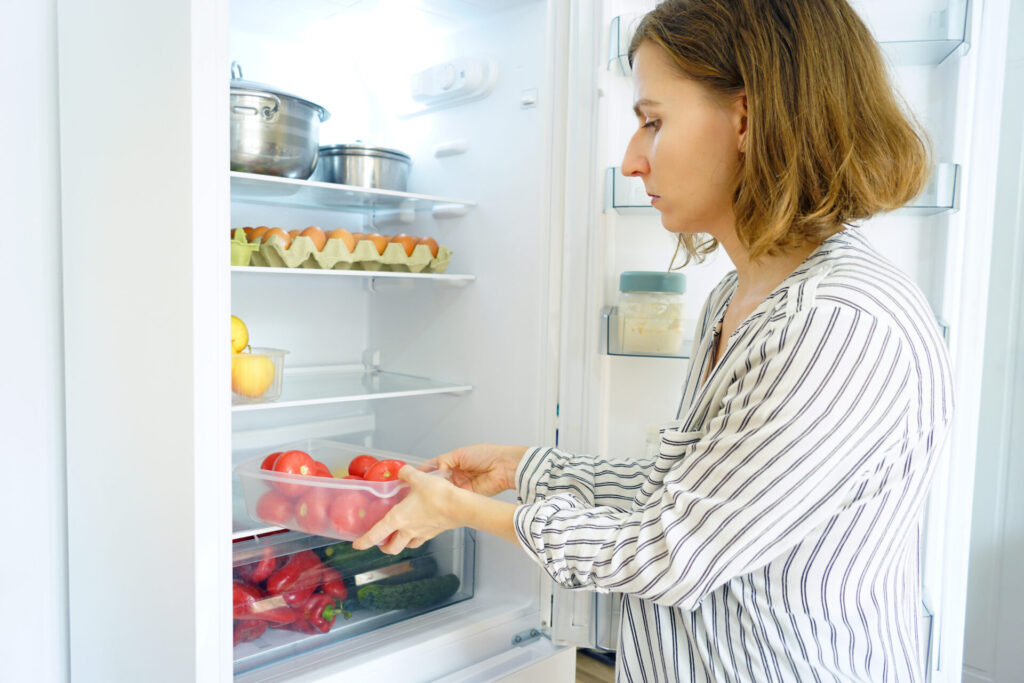
For example, the week before Thanksgiving, consider if there are foods you can eat or share to make room for your upcoming holiday feast. Plus, before heading to the grocery store to purchase ingredients for your holiday feast, take a few minutes to take inventory of what you already have on hand. Check your refrigerator, freezer, and pantry for ingredients you can incorporate into holiday recipes or use in meals leading up to Thanksgiving. By using what you already have, you can reduce unnecessary purchases, save money, and prevent perfectly good food from being thrown away before the holiday even begins. A little planning pre-turkey day can make a big difference in reducing food waste throughout the entire Thanksgiving season.
Stop Guessing, Start Guestimating
One of the biggest contributors to holiday food waste is simply making too much. The Talking Turkey study found that 74% of people who prepared holiday food said they prepared more than needed. That’s not surprising. No good host wants to run out of food, especially on Thanksgiving. In fact, studies show that people with a “good provider identity” tend to overprepare the amount of food, which can lead to food waste (see studies from Aschemman-Witzel et al, 2019; and Barbera et al, 2020).
Frankly, even for the most skilled cook, it’s easy to overestimate how much your guests will eat, especially when juggling multiple dishes and feeling the pressure to have enough. That’s where easy-to-access online tools like the Guest-imator come in. This free, interactive tool helps you calculate exactly how much to prepare based on how many guests you’re hosting and what kinds of eaters they are. It’s simple and can be an effective way to prevent overbuying and overpreparing.
Level Up Your Leftovers
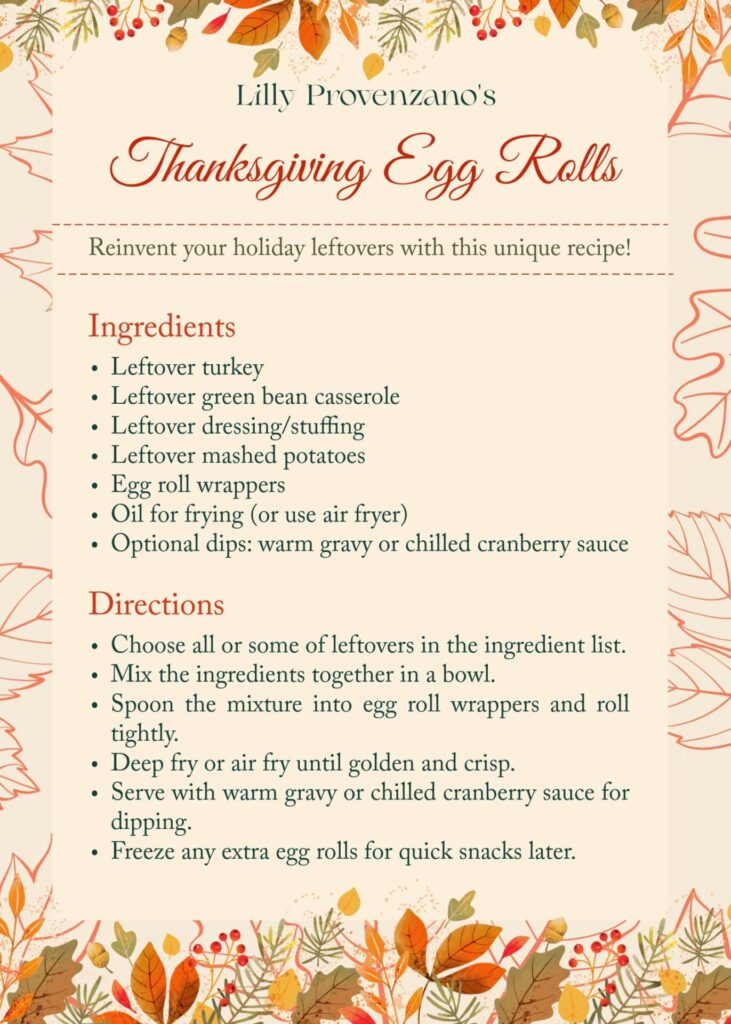
Even with careful planning, leftovers can be inevitable, and honestly, they are many people’s favorite part of the holiday. But having leftovers is no guarantee they’ll get eaten. The Talking Turkey study found that 37% of participants intended to eat their leftovers but ended up tossing them. To keep Thanksgiving leftovers out of the trash, try freezing them, sharing them with someone who needs them, or, as a last resort, composting them. You can also repurpose your leftovers into something new – and it doesn’t have to be turkey sandwiches four days in a row! They can be innovative and something your family looks forward to! That’s exactly the goal behind Lilly Provenzano’s Thanksgiving Egg Rolls recipe. It’s flexible, kid-friendly, and a smart way to use up leftovers.
These egg rolls are crispy and packed with familiar Thanksgiving flavors but in a totally new form. They’re perfect for lunch, dinner, or even a fun snack. They also freeze wonderfully, which helps extend the life of your leftovers even further! Find more Thanksgiving leftover recipes here.
One Last Helping
Thanksgiving is a celebration of gratitude and connection. With a little planning and creativity, we can keep Thanksgiving food out of the trash can and in our bellies. Take inventory the week before Thanksgiving, use tools like the Guestimator to find the right-sized portions, and find creative ways to repurpose leftovers are examples of ideas to conserve food while stretching your food dollars. Whether you are cleaning out your pantry before the holiday, planning portions for your guests, or rolling up your leftovers as Thanksgiving Egg Rolls, every step makes a difference. We hope your holiday is full of joy, connection, and delicious meals!
This work is supported by the Agriculture and Food Research Initiative, project award no. 2024-68015-42110, from the U.S. Department of Agriculture’s National Institute of Food and Agriculture. Any opinions, findings, conclusions, or recommendations expressed in this publication are those of the author(s) and should not be construed to represent any official USDA or U.S. Government determination or policy.
DISCLAIMER OF ENDORSEMENT: Reference to any specific commercial product, process, or service by trade name, trademark, manufacturer, or otherwise, does not necessarily constitute or imply its endorsement, recommendation, or favor by CFCWR. The views and opinions expressed herein shall not be used for advertising or product endorsement purposes.